


Revenge of the Queen
SkyHorse
I went into Revenge of the Queen expecting a straightforward palace-themed simulation, but its central idea gives it a sharper edge: you return after a miserable previous life and try to change the outcome. That setup makes the game less about simply decorating a royal world and more about making choices while keeping an eye on consequences. I found it easiest to enjoy when I treated each session as a small chapter in a longer comeback story rather than expecting an action game.
Developed by SkyHorse, this free simulation game is aimed at players aged 10 and over. It has reached over 100K installs and holds a 4.0 average from around 6K ratings, which suggests a reasonably established audience without making it feel like a massive mainstream title. The current version is 1.0.34, and it runs on Android 6.0 or later. Optional purchases range from $0.99 to $99.99 per item, so the free entry point is useful, but anyone who dislikes spending pressure should pay attention to the way progression is presented.
How the palace story feels in everyday play
The strongest part of the experience is the revenge premise. Starting from a failed former life gives ordinary palace decisions more emotional weight. I was not just moving through a collection of menus; I was trying to understand which choices might help the queen avoid repeating the same downfall. That makes the game a natural fit for players who like narrative simulation, court drama and gradual planning more than fast reflex challenges.
A realistic use case is a short evening session after work or school. I could open the game, review what was happening in the palace, make a few decisions and stop without needing a long uninterrupted block of time. That structure suits people who enjoy checking progress regularly. It is less suitable for someone looking for a quick arcade round, a competitive match or a game built around constant physical action.
The simulation label matters here. The appeal comes from managing a developing situation and thinking through the queen’s position, not from direct combat skill. If your usual alternatives are idle games or story-heavy role-playing games, this sits somewhere between them: it offers the ongoing rhythm of a management title while using a personal revenge story to give the decisions context. Compared with a pure visual novel, it feels more interactive; compared with a detailed strategy simulator, it is easier to approach but may feel less satisfying to players who want deep systems and precise control.
Related News






Readable choices are more important than decoration
For me, the most important accessibility question in a game like this is whether I can understand what each screen is asking me to do. Palace simulations can become confusing when story text, character information, rewards and progression prompts compete for attention. I found that the best way to stay oriented was to read the situation first, identify the immediate decision, and only then inspect secondary information. Rushing through every visible prompt makes the experience feel more cluttered than it needs to be.
The revenge premise also helps with orientation because it gives the session a clear mental anchor. When I was unsure why I was making a particular choice, I could return to the main question: does this help the queen regain control after her previous failure? That is a useful habit for players who find open-ended management games difficult to follow. Instead of trying to remember every detail, focus on the current political or personal objective and treat other information as support.
Players with reading difficulties may want to approach it in shorter sections rather than trying to absorb every piece of dialogue at once. I found that pausing between decisions made it easier to separate story information from game instructions. This is also helpful for younger players within the age guidance, especially when an adult is nearby to discuss why a choice might produce a particular result.
Gallery
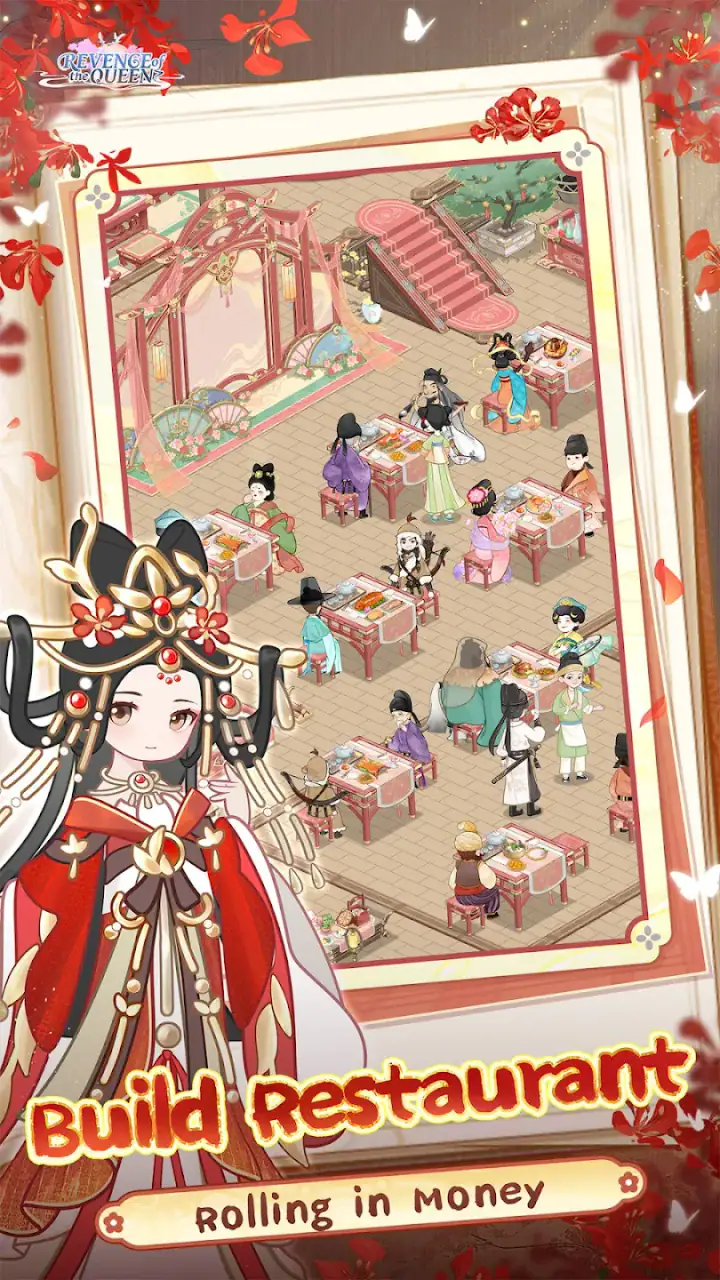
At the same time, this is not the right choice for someone who wants a purely visual experience. Much of the enjoyment depends on understanding the situation and following the story. If reading small blocks of narrative or comparing several pieces of information is tiring, a simpler puzzle game with fewer text-based decisions may be a better fit.
Touch control, pace and sensory comfort
The game’s simulation format is friendlier to players who prefer deliberate interaction over rapid tapping. I did not approach it like an action title where a missed gesture immediately decides the result. That slower decision-making can work well for people with limited dexterity, hand fatigue or a preference for using one finger carefully. It also makes the game more approachable on a phone when I am holding the device in an awkward position.
There is a trade-off, though. A menu-driven game can still demand repeated taps, screen changes and attention to small interactive areas. Without claiming a dedicated accessibility mode, I would not assume that every player will find the interface equally comfortable. People with tremors, reduced precision or difficulty distinguishing nearby controls should test the basic navigation early and avoid making a purchase until they know the interaction feels manageable.
The same caution applies to sensory needs. Palace presentation can be visually busy, and story games often ask the player to move between decorative backgrounds, character scenes and information panels. I personally found it easier to play in a calm setting with the phone brightness adjusted to the room. That is not a special feature of the game, but it is a practical way to reduce strain during longer sessions.
Players sensitive to sudden visual changes or sound should also begin with a brief session and observe how comfortable the presentation feels. I would not recommend assuming that a simulation is automatically low-stimulation. The pace may be calmer than an action game, but the combination of text, character scenes, prompts and notifications can still become tiring when attention is already limited.
Playing in different places and with different routines
One of the better qualities of this title is how naturally it fits into fragmented free time. I could imagine playing while commuting, waiting for an appointment or taking a short break, provided the surrounding environment was quiet enough to follow the story. The revenge plot rewards attention, so I would not treat it as a game to operate entirely in the background while doing something else.
For players with concentration difficulties, a useful routine is to decide on one small goal before opening the game. That might mean checking the current palace situation, completing one decision sequence or reviewing the next step in the queen’s comeback. Limiting the session in this way prevents the many pieces of a simulation from blending together. It also makes stopping easier, which matters when the game is being used during a busy day.
It can work for family members who want a shared story discussion, but the age guidance should still shape that decision. The central theme involves death, failure and revenge, so a parent should decide whether those ideas suit a particular child even though the listed rating is Everyone 10+. I would describe it as more appropriate for players who are comfortable with dramatic palace conflict than for very young children seeking light, consequence-free play.
The free price removes the biggest barrier to trying it. That is valuable for anyone who needs time to judge readability, touch comfort or narrative clarity before committing. However, optional items costing from $0.99 to $99.99 mean that families should discuss purchasing rules in advance. A free download is not the same as a completely cost-free experience, and players who are sensitive to prompts or progression friction should keep that distinction in mind.
Where the experience may still create barriers
The game’s main barrier is not physical speed; it is cognitive load. A player may need to remember relationships, interpret story developments and decide which action best supports the queen’s position. That can be rewarding for someone who enjoys planning, but tiring for anyone who wants a clearly marked path from one objective to the next.
I also would not recommend it to players who dislike repeated narrative decisions. The revenge setup is the reason to stay engaged, so removing the story focus would leave less of the game’s personality. Someone looking for a sandbox with extensive construction, open exploration or detailed economic control may be happier with a dedicated management simulator instead.
Another limitation is that the game may not suit every attention pattern equally well. A player who needs large, highly separated controls, strong customization or explicit visual alternatives should examine the first few screens carefully. I would rather be honest about that than describe the title as universally accessible simply because it is slower than an action game. The practical test is simple: can you read the current situation, identify the available action and complete the interaction without discomfort?
Players using older devices should also keep expectations realistic. Android 6.0 compatibility makes the game available to a broad range of phones, but minimum operating-system support alone does not tell me how every device will feel during play. If the phone has a small display or struggles with other visually rich games, a short trial is sensible before investing time or money.
Small habits that make the game easier to follow
My first useful habit was to slow down at every meaningful decision instead of tapping through dialogue automatically. In a revenge story, context is not decoration; it is the clue that tells you what the decision is really about. Reading first also reduces the chance of making a choice simply because it is the most prominent button on the screen.
A second habit is to separate progress from spending. Because optional purchases are available, I would play a few sessions while paying attention to what can be achieved through ordinary play. This gives a clearer sense of whether the free experience matches your expectations. It is especially important for younger players or anyone managing a strict entertainment budget.
A third tip is to use the game as a focused activity rather than a constant background companion. I found that the story worked better when I gave it a few uninterrupted minutes. This approach benefits players who have trouble switching between several tasks, and it prevents the palace narrative from becoming a blur of half-read scenes.
Finally, I would judge the game by the kind of satisfaction it offers. The reward is not necessarily instant excitement; it is the feeling of gradually understanding the queen’s predicament and making a better attempt than the previous life. If that sounds appealing, the slower pace becomes a strength. If you need immediate feedback after every tap, the same pace may feel frustrating.
Who should choose it, and who should skip it?
I would recommend it to players who enjoy story-led simulations, palace intrigue and the idea of improving a failed second chance. It is particularly suitable for people who like playing in short sessions, making deliberate choices and following a character’s gradual change in fortune. The free starting point also makes it practical for curious players who want to test the interface and tone before spending anything.
I would be more cautious about recommending it to players who need extensive interface customization, dislike reading, or want a game that can be enjoyed without attention to context. It is also a weak match for anyone searching for reflex-based action, multiplayer competition or a highly technical management system. Those players should look toward action games, competitive titles or deeper strategy alternatives instead.
For accessibility-minded players, the fairest conclusion is that its measured simulation pace may be more comfortable than fast games, but comfort depends on the actual text, controls and visual presentation on your device. I would install it, play through the opening interaction, and check whether the screen remains readable and the tapping feels reliable. That quick personal test is more useful than assuming the palace theme guarantees an easy experience.
My inclusive verdict
Revenge of the Queen works best when its dramatic premise and simulation rhythm meet a player who enjoys thoughtful, text-led decisions. SkyHorse has built its identity around a queen trying to overcome a disastrous former life, and that gives the game a more focused purpose than a generic palace management title. I liked that it could fit into everyday breaks without demanding action-game reflexes.
Its accessibility strengths are mainly practical: a deliberate pace, a free entry point and a story structure that can be approached in small sessions. Its barriers are equally clear: players must be comfortable reading, tracking context and working through touch-based navigation that may not suit every motor or visual need. Optional purchases add another consideration, particularly for families and budget-conscious players.
My final recommendation is selective rather than universal. Try it if you want a revenge-centered simulation that rewards attention and gradual planning. Skip it if you need a highly customizable interface, minimal reading or immediate action. For the right player, the queen’s second chance is an engaging reason to return; for everyone else, a simpler or more openly accessible alternative may provide a smoother experience.
FAQs for Revenge of the Queen
What is Revenge of the Queen?
Revenge of the Queen is a story-driven mobile game that combines palace drama, romance, character development, and strategic progression. Players follow the journey of a central heroine as she faces betrayal, political conflicts, and difficult decisions. Along the way, you can interact with other characters, unlock story chapters, improve abilities, and shape certain events through your choices.
Is Revenge of the Queen free to download and play?
The game can generally be downloaded for free, but it may include optional in-app purchases. These purchases can provide premium currency, special items, additional attempts, costumes, or faster progression. You can usually enjoy the main experience without paying, although some story options or resources may require patience, watching advertisements, or spending money. Check the store listing for the current pricing details.
Does Revenge of the Queen require an internet connection?
An internet connection may be needed for the initial download, account synchronization, advertisements, event content, and certain online features. Some previously loaded sections might remain accessible offline, but the game is designed to work best while connected. Playing online also helps ensure that progress, rewards, updates, and limited-time events are synchronized correctly with the game servers.
Is Revenge of the Queen suitable for all ages?
Revenge of the Queen is primarily aimed at players who enjoy dramatic stories, romance, rivalry, and fantasy or historical-style court settings. Depending on the version and region, it may contain themes involving betrayal, conflict, emotional manipulation, and romantic situations. Parents should review the official age rating and privacy information before allowing younger players to download it.
Can progress in Revenge of the Queen be saved across devices?
Progress transfer depends on whether the game supports account linking through a platform such as Google, Apple, Facebook, or an in-game account system. Before changing devices or reinstalling, open the settings menu and connect your progress to an available account. Playing as a guest can increase the risk of losing saved data if the application is deleted or the device is reset.
Pros
- Engaging palace intrigue keeps the story moving.
- Character relationships add emotional depth to the gameplay.
- Regular rewards make daily progress feel worthwhile.
- The interface is easy to navigate for new players.
- Multiple activities provide variety beyond the main storyline.
Cons
- Progress can become slow without spending premium currency.
- Some dialogue choices have limited impact on the final outcome.
- Frequent notifications may feel intrusive for some players.
- The game requires a stable internet connection to play.
- Later chapters may repeat familiar tasks and objectives.


